Showing posts with label Ancient Civilizations. Show all posts

Sunday, 25 October 2020

Haunted Ruins in the Gobi Desert

While I was working on the fifth book in the RHUNA series, namely Rhuna, The Snow Dreamer, which is set in Tibet, I was planning ahead and paving the way for Rhuna to journey northwards towards China.   Naturally, she would take the ancient Silk Road, and  I browsed the internet for interesting and unusual places along this famous trade route which might provide further ideas or inspiration for the next books in the series.   


I wasn’t expecting to find much in that region of the Gobi Desert and Inner Mongolia, so I was thrilled and delighted when I came across articles about the ruins of Etzina, known locally as Khara-Khoto, which means Black City in the Mongolian language.  And there was the title of my sixth book already, namely Rhuna: Black City!

https://www.amazon.com/gp/product/B07ZLM6RF3

When I read this opening sentence of a National Geographic article, I knew I had found the real life inspiration for my next novel:

Ghosts live here. That's what the Chinese say. They claim this place, a walled fortress abandoned in the 14th century and called Khara Khoto—Black City—is inhabited by demons and spirits.”

https://www.nationalgeographic.com/science/earth/surface-of-the-earth/alashan-plateau-article/

Today, these ruins are a tourist attraction, and you can find the site on Google Maps using this link:


It’s actually quite beautiful, isn’t it?  But these ruins can be very frightening at night, according to local legends and many stories about seeing moving lights and hearing strange sounds.  Most people are intrigued by such ghost stories, so I was inspired to include them near the end of Rhuna: Black City when Rhuna and her party investigate the ruins.

Magic and supernatural events are frequently mentioned in describing the city’s history and ultimate demise as well.  Imagine my surprise when I read about the ruler of the Black City using Black Magic in “Men and Gods in Mongolia” by Henning Haslund, a Danish anthropologist and travel writer who explored Mongolia in the 1920s.

“And then I began to hear the legends of Khara-Khoto, “The Black and Dead city”, which once was ruled by Khara-Bator Janjyn…who bore the name of Khara because he could talk “Khara ugge” (black words = magic formulas)”

It was exciting to find that real-life historical texts mirrored the villain in my Rhuna series whom I had named ‘the Dark Master’ because he wore black and practiced black magic!  For example, in one text, the ruler is called “the Black Hero”, and when his city was about to be defeated, he killed his family and tried to escape using black magic. 


There are several different versions of the Black City’s demise, but most are similar in describing the attack on the city by first re-directing the course of its river and thereby cutting off the city’s water supply.   Some records describe the Chinese Emperor destroying Black City in this way:

“The (Chinese) Emperor himself threw a magic stone into the river, which gave water to the besieged, and the stone, falling between the town and the sources of the river, caused the water to leave its ancient bed and break a new course for itself far to the westward of the town. 

 (from “Men and Gods in Mongolia” by Henning Haslund)


https://www.amazon.com/dp/1939149436

When the site of Khara-Khoto was excavated and documented by archaeologists early last century, many scrolls in an unknown language were discovered. 

“But parts of the documents were never deciphered, because they were written in a language unknown to the researchers.  According to one of the versions, ancient priests had encrypted magic texts in the scrolls. And according to others, those were probably the only documents serving as proof of the ancient civilization that built the city of Khara-Khoto.”

http://ancients-bg.com/curse-of-the-dead-city-of-khara-khoto/

It is quite surprising that this ancient city has so many legends and stories involving magic, the supernatural and continual hauntings down to this present day.  You could almost believe that the Dark Master really did exist and caused such supernatural chaos in the Black City!

http://www.silkroadtourcn.com/attractions/Khara-Khoto.html


Friday, 26 June 2020

Amazing Megaliths Around the World

What are Megaliths?  
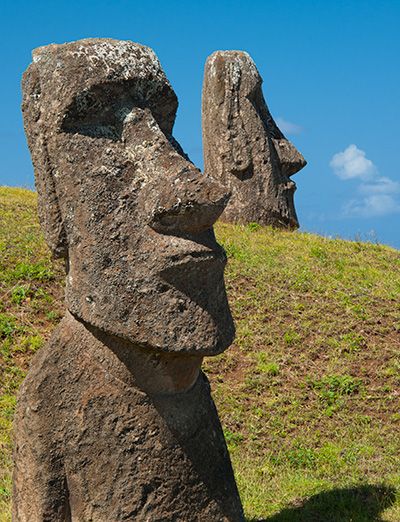
The basic answer is: a large stone that is part of a prehistoric structure or monument.  The famous pyramids of Giza in Egypt are considered megalithic structures because they were built with enormous blocks of granite or other dense and heavy stone.  Stonehenge is also a megalithic site, along with dozens more around the world.   The Easter Island statues are also megaliths.


They were built to last and endure the passage of time.  They did a good job of that too, because they outlived their civilizations by far, leaving only questions and mysteries as to their purpose and even with which technology they were built.


Technology?  Yes - look at this:

This was found in Peru, the home of the ancient Incas who were megalith builders.  It looks like the stone was softened so that it could fit into the slot of the other stone.   Softening stone for this purpose was something I came across when reading all kinds of books as research for my RHUNA series which is based on theories of an ancient megalithic civilization that spread across the world - perhaps from a legendary advanced place like Atlantis.

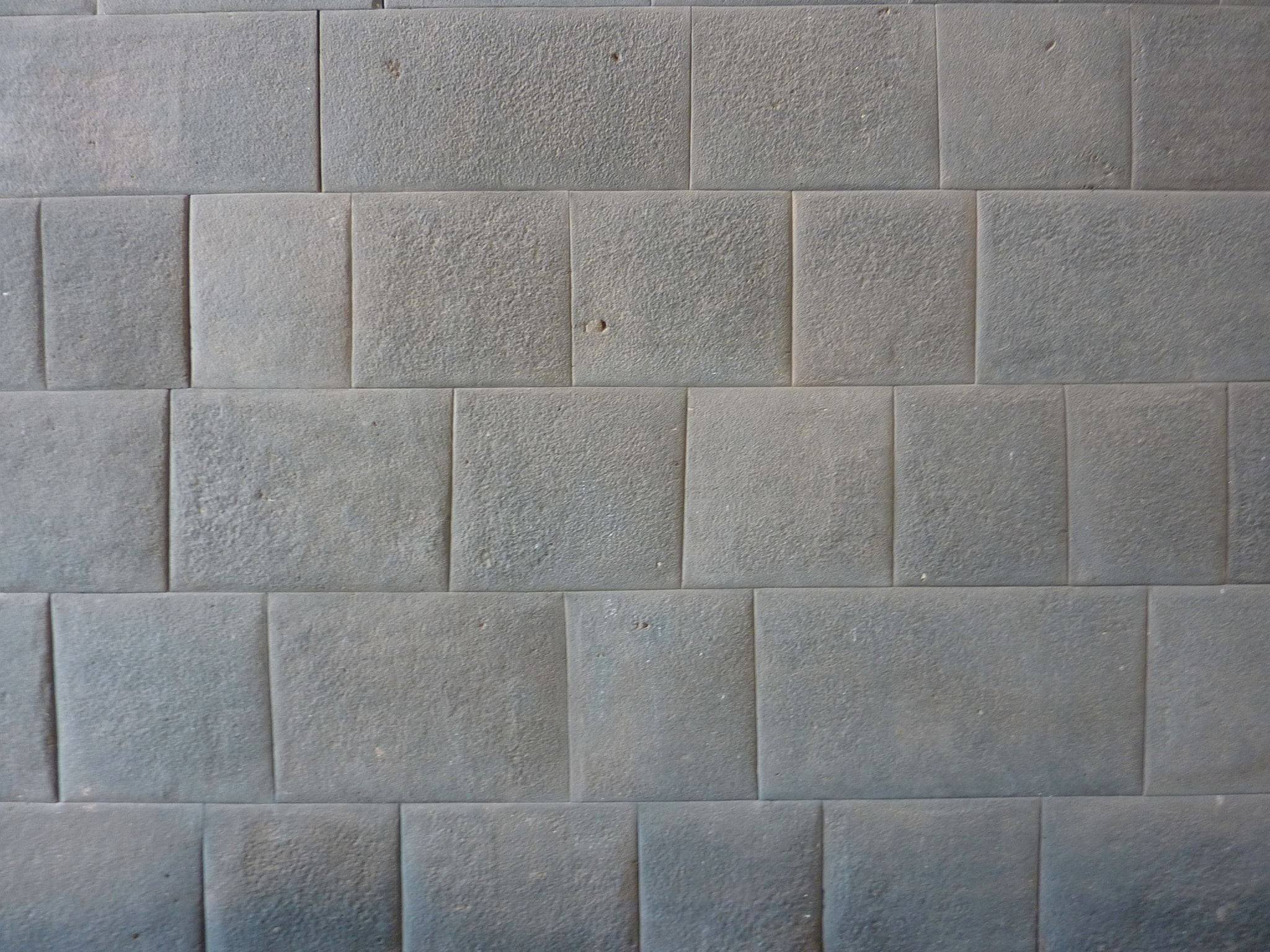
One of the most outstanding main features of the megalithic culture around the world is the way stone blocks were cut and put together in a wall.  The faces of each block are perfectly straight and smooth, and fit perfectly next to adjoining stone blocks.

   
Megaliths come in all shapes and sizes, all over the world.  Here are some I came across recently:


"Arsh Bilqis" - part of a temple in Yemen.

They don't come in basic rectangles either, but often have many more facets, some with slots, grooves, holes and other mysterious bits which once served to connect the block to another block or device.  Check these out!


Peru


Shrine of Panoias, Portugal


A strange megalith with precise cuts in Indonesia...and something even more bizarre in India


A wall in Japan...much like walls on the South Pacific Island of Tonga...

And here is a wall in India, identical to those in Cusco, Peru, Easter Island and other megalithic sites:


Warangal, India

And this was just a sample of the extraordinary megaliths around the world!


Thursday, 24 January 2019

Red-haired Mummies around the World

Most of us immediately think of Ancient Egypt when we hear the word “mummies”, but did you know that mummies have also been found in countries far removed from Egypt, such as China and Peru?  Not only that, but many of these mummies are Caucasians with blonde or red hair!

At first it was assumed that the mummies found in Egypt were the direct ancestors of the Egyptians living there today, namely Arabs.  But advances in science and technology have now revealed that many mummies of Ancient Egypt are Caucasian or white-skinned with blueish eyes and, in many cases, blonde or even reddish hair.  Even the most famous mummy, the young Pharaoh Tutankhamen, was European, according to modern DNA testing!


Many other mummies found in Egypt may not need DNA testing to prove their connection to Europeans because their red hair and Caucasian features already testify to their race.  Even the mummy of another famous Pharaoh, namely Ramesses II, whose body has been well preserved, revealed red hair pigments, according to this scientific article:
https://www.beyondsciencetv.com/2017/08/02/the-mystery-of-ancient-egypts-red-haired-mummies/


Mummy of Ramesses II
It is also of interest, however, that some experts believe that the famous enigma, the Sphinx,  has negroid features, and among the Caucasian mummies, many with African heritage have also been discovered.  
This is not really surprising when you consider that Egypt is actually part of the African continent, and that African nations from Nubia and Ethiopia merely had to travel down the Nile to reach Egypt.  Furthermore, it is worth considering how people migrated throughout history, and that like in our modern history, some nations travelled further across the world than others, establishing colonies or simply exploring uncharted lands.
A painting from the tomb of Seti I shows that Ancient Egypt had a variety of races
With this in mind, the discovery of red-haired mummies in China and Peru begins to make more sense.  The mummies of China and Peru show mummifying techniques similar to those used in Ancient Egypt, and since many of them also feature reddish hair and European features, we can assume a definite link between them.  

The red-haired mummies found in China are especially interesting because they have been well-preserved in the dry desert-like conditions of the Tarim Basin in far north-western China.  These mummies wore colourful clothes and in particular, woollen tartans – much like our modern-day Celts!   

Some books go into great detail about the mummies found in China:

The Tarim Mummies: Ancient China and the Mystery of the Earliest Peoples from the West 
 

https://www.amazon.com/Tarim-Mummies-Ancient-Mystery-Earliest/dp/0500051011


This book, The Mummies of Urumchi, details the woollen tartan clothes of the mummies:


The enigma of red-haired people in ancient history continues, with the discovery of a tall, female Caucasian red-haired mummy in Mammoth Caves, Kentucky...
 ...and reaches even further to small islands such as the Canary Islands off the coast of Morocco...
...and even as far as Easter Island where the famous statues have been restored to show the “top-knot” hairstyle made from reddish stone.  The statues’ features are also Caucasian.  When Captain Cook first visited Easter Island in the 1770s,  he recorded that he saw many people with fair skin and reddish hair living among darker, brown-skinned people. 


 There is also evidence of red-haired people among the Maori, the native people of New Zealand, according to this article:
We might never know all the historical facts exactly, but in the meantime the theories surrounding an ancient European race with reddish hair has been inspiration for my Fantasy series.  Based on the legend of Atlantis, blended with New Age themes, the main characters in the RHUNA series are white-skinned people, some with red hair.  Although Rhuna is a Polynesian woman from Easter Island, she mingles with people of many races and backgrounds as she travels the ancient world.  

The second and third books are set in Ancient Egypt, and in the third book Rhuna, The Star Child, the European and Arab races living in Ancient Egypt mix with the African nations from the south, and Rhuna interacts with the beautiful African Queen Uxbana.

Sunday, 20 May 2018

Who Were the White Gods of Ancient History?


You’ve probably come across them and didn’t know it; either at school, in books or even TV documentaries. Even pop culture pays tribute to them in shows such as “Ancient Aliens” and the Ancient Astronaut concept.  Who or what were the White Gods?  They are the people that history, legends and folk stories all over the world honoured, feared or worshipped throughout time.


South American cultures such as the Mayans and Aztecs gave the White Gods names such as Quetzalcoatl, Viracocha and Kukulkan, and they were described as having white skin, blue eyes and a red beard.  In Peru, mummies with red hair have been found, and in many other countries there are stories of white-skinned, red or fair-haired people with blue eyes.   The stories say that these tall, fair people brought technology, laws and the arts.


When the Spanish conquistadors first arrived in South America, they were greeted as the returning White Gods, and even Captain James Cook who explored the Pacific, including Hawaii and Easter Island, was greeted as the returning “white god” of their legends.   

The famous statues on Easter Island feature a red stone on their heads which seems to indicate that the statues represent red-haired people.  The statues also have Caucasian features.


 Folk tales and legends usually have a firm base in reality, and it is believed by many that a Caucasian race (predominantly with reddish hair and blue eyes) brought advanced culture and technology to the Americas, the Pacific Islands and other lands, which led to them being venerated as gods or superhuman, superior beings.
This theory fits the legend of Atlantis: a highly advanced civilization that existed in "pre-history", found in writings by Plato when discussing Ancient Egypt.  Historians have been puzzled by the technology and art of Ancient Egypt because it seemed to appear abruptly on the world scene, not develop gradually.  Maybe the Atlanteans or White Gods brought their knowledge to Egypt?

I have used these ideas about legendary "White Gods" and Atlanteans in my Fantasy Fiction series, RHUNA: A Quest for Ancient Wisdom..  While Rhuna is only part Caucasian, she nevertheless inherits the Atlantean culture, and her adventures take her across the ancient world to Ancient Egypt, then Ancient India and beyond.
http://www.amazon.com/gp/product/B01ANDQ73W


Tuesday, 18 July 2017

UFOs and Flying Machines in the Ancient World


UFOs and Flying Machines in the Ancient World


When I first came across this subject many years ago, I promptly dismissed it as historically and scientifically impossible.  After all, we only began to master flight just over a century ago, right? But as I became more curious and interested in ancient history, I began to realize that scientists, historians, archaeologists and other experts didn’t have the answer to the many questions I began to have.     
Next thing I knew, I was reading about ancient flying machines called vimanas and hidden, suppressed technology, and although many of these books were written by laymen without impressive titles or credentials, they actually made more sense to me than the history books we are taught at school and in universities!  
One of the most compelling arguments for flight in ancient times, in my opinion, are the Nazca lines in Peru.  Not only are most of the diagrams and pictograms on the flat desert plains meant to be seen from high above, but a hilltop had been flattened to look exactly like a modern-day runway.


Then there are artifacts that look like model planes, found both in Ancient Egypt and the ancient Americas.  Granted, some of them could be representations of birds or even a fish, but then there’s also an ancient written text describing flying machines called vimanas.  That’s right:  the Vedic texts of Ancient India mentions them several times.
http://www.theancientaliens.com/technology--quimbaya-airplanes
Erich von Däniken, who wrote Chariots of the Gods and similar books about what is now referred to as “the Ancient Alien”  theory, has found countless pictures, statues and artifacts which resemble flying craft, astronauts and other highly advanced technology.   Can we really dismiss it all as misinterpretation of historic records? 
Other people, some with impressive credentials in science and physics, believe that Tesla had developed a completely different "science" which included anti-gravitational electromagnetic energy.   One plausible theory is that this technology, which became hidden or suppressed and was only known to a select few, is being used to make modern-day flying craft in the shape of saucers.  Could these be the UFOs people keep seeing in our skies?


Whatever the truth may be, I have used this idea in Rhuna: New Horizons, which is set in Ancient India, and where the 'vimanas' are propelled by electromagnetic anti-gravitational forces.
https://www.amazon.com/Rhuna-Horizons-Urban-Fantasy-Book-ebook/dp/B0714JJV82


Here are some more references:
https://www.amazon.com/Anti-Gravity-Unified-Science-Adventures-Unlimited/dp/0932813100


Monday, 28 March 2016

Book Review: Murder in Absentia by Assaph Mehr

Murder in Absentia by Assaph Mehr


I had only to read this book's subheading,  "A story of Togas, Daggers and Magic", to know I would enjoy the blend of ancient history and magic, and sure enough, I could hardly put it down!

The ancient world has always fascinated me, and mankind's search for magic throughout the ages is even more rivetting.  Throw in many great characters with Latin names, and an excellent story told in the first person by Felix the Fox about the investigation he is hired to undertake, and you find yourself immersed in another world. 

And a very enjoyable world, at that.  You don't even need any knowledge of history to appreciate this well-told story because it has all the hallmarks of a great book with overall appeal to most readers.   In fact, the author explains in the notes that the setting is far from accurate, but rather a combination of many elements making up the Roman Empire.  Yet the descriptions of food, daily life of the people, the towns and cities as well as gladiator games combine to make a very authentic experience for the reader. 

Personally, I was hooked as soon as I read in the opening chapter that the son of a wealthy Roman had died, apparently from a black magic rite gone wrong.  There is nothing cliché about the magic, nor anything else in this book, for that matter, and I was pleasantly surprised by all the ideas and twists in the story. 

This book is the first in a series of books featuring Felix the Fox, the unconventional Roman sleuth, and needless to say, I'm looking forward to the next book!  In the meantime, I've written a more formal review for this book at amazon and Goodreads, and you simply must see the author's fabulous website.


Friday, 25 March 2016

Nuclear Warfare in the Ancient World

Could it be possible?  An atomic bomb exploding in Ancient India thousands of years ago?


When I first read about it somewhere many years ago, I was skeptical.  Like most people, I believed that mankind had reached the pinnacle of technological development in my own lifetime, not hundreds - and certainly not thousands of years ago.

But then I began to read and research various subjects that interested me, and I soon found myself confronted with discrepancies and doubts. 

I realized that the history we are taught in school and most books is full of holes and big gaps!

And the rest is mostly theory and guesswork!

Ancient Egypt is a fine example of how modern historians fall short miserably when trying to explain the highly advanced engineering techniques evident in the pyramids and other structures.  So it stands to reason that, if ancient Egyptians had ultrasonic drills and technology still ahead of our own, that they could also have discovered how to make hydrogen and nuclear weapons.

Is there any evidence of such weaponry, you ask. 

Yes!  Look at this:

They are skeletons with a very high radiation reading, found in the area where the atomic blast is believed to have occurred.  Nearby, sand had turned to green glass, which is only possible when sand is subjected to unnaturally high heat.

And if written records are any proof of historical events, then there is a clear description of a nuclear explosion in the Vedic/Ancient Indian holy book, the Mahabharata.  Here is just one webpage with further details:


So, in light of this new knowledge, I am going to use the setting of Ancient India for my fourth book in the Rhuna series, and the story will culminate in a nuclear explosion just as described in the Mahabharata, and according to archaeological evidence!