Showing posts with label Fantasy. Show all posts

Sunday, 25 October 2020

Haunted Ruins in the Gobi Desert

While I was working on the fifth book in the RHUNA series, namely Rhuna, The Snow Dreamer, which is set in Tibet, I was planning ahead and paving the way for Rhuna to journey northwards towards China.   Naturally, she would take the ancient Silk Road, and  I browsed the internet for interesting and unusual places along this famous trade route which might provide further ideas or inspiration for the next books in the series.   
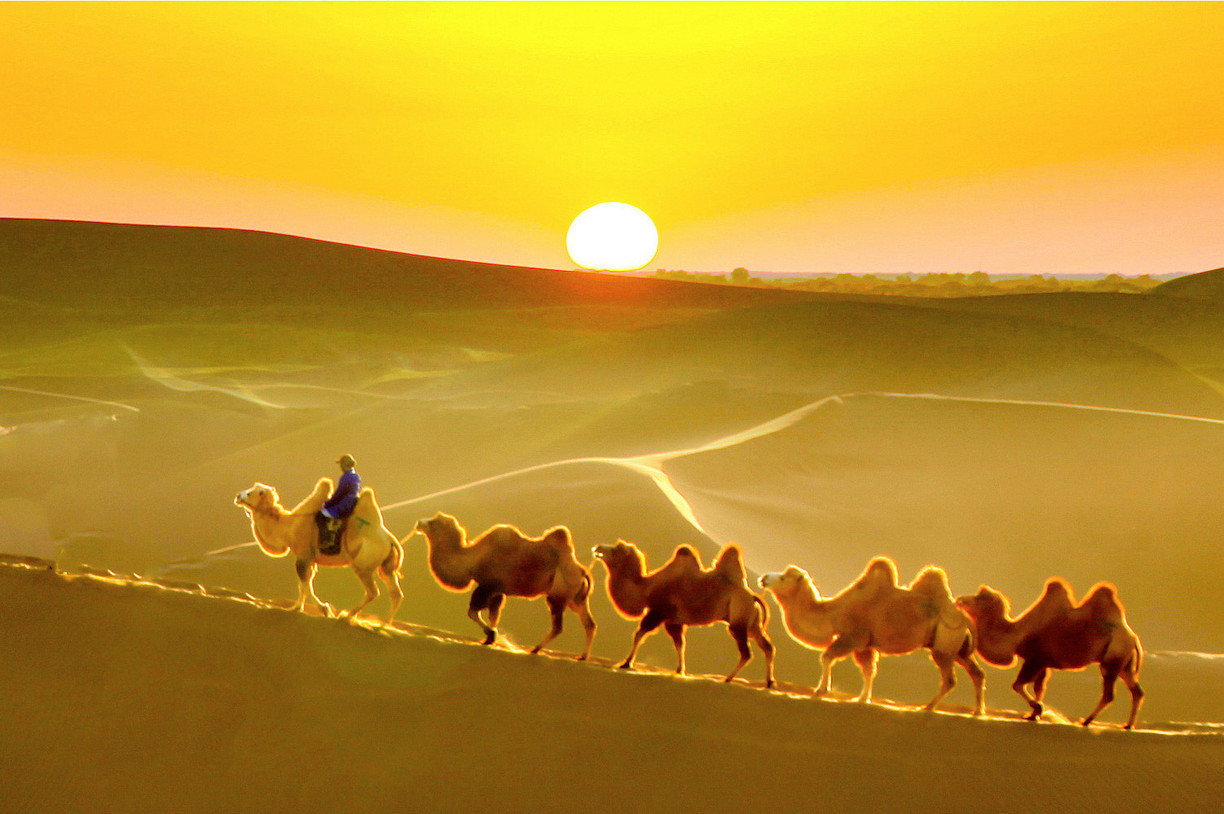

I wasn’t expecting to find much in that region of the Gobi Desert and Inner Mongolia, so I was thrilled and delighted when I came across articles about the ruins of Etzina, known locally as Khara-Khoto, which means Black City in the Mongolian language.  And there was the title of my sixth book already, namely Rhuna: Black City!

https://www.amazon.com/gp/product/B07ZLM6RF3

When I read this opening sentence of a National Geographic article, I knew I had found the real life inspiration for my next novel:

Ghosts live here. That's what the Chinese say. They claim this place, a walled fortress abandoned in the 14th century and called Khara Khoto—Black City—is inhabited by demons and spirits.”

https://www.nationalgeographic.com/science/earth/surface-of-the-earth/alashan-plateau-article/

Today, these ruins are a tourist attraction, and you can find the site on Google Maps using this link:


It’s actually quite beautiful, isn’t it?  But these ruins can be very frightening at night, according to local legends and many stories about seeing moving lights and hearing strange sounds.  Most people are intrigued by such ghost stories, so I was inspired to include them near the end of Rhuna: Black City when Rhuna and her party investigate the ruins.

Magic and supernatural events are frequently mentioned in describing the city’s history and ultimate demise as well.  Imagine my surprise when I read about the ruler of the Black City using Black Magic in “Men and Gods in Mongolia” by Henning Haslund, a Danish anthropologist and travel writer who explored Mongolia in the 1920s.

“And then I began to hear the legends of Khara-Khoto, “The Black and Dead city”, which once was ruled by Khara-Bator Janjyn…who bore the name of Khara because he could talk “Khara ugge” (black words = magic formulas)”

It was exciting to find that real-life historical texts mirrored the villain in my Rhuna series whom I had named ‘the Dark Master’ because he wore black and practiced black magic!  For example, in one text, the ruler is called “the Black Hero”, and when his city was about to be defeated, he killed his family and tried to escape using black magic. 


There are several different versions of the Black City’s demise, but most are similar in describing the attack on the city by first re-directing the course of its river and thereby cutting off the city’s water supply.   Some records describe the Chinese Emperor destroying Black City in this way:

“The (Chinese) Emperor himself threw a magic stone into the river, which gave water to the besieged, and the stone, falling between the town and the sources of the river, caused the water to leave its ancient bed and break a new course for itself far to the westward of the town. 

 (from “Men and Gods in Mongolia” by Henning Haslund)


https://www.amazon.com/dp/1939149436

When the site of Khara-Khoto was excavated and documented by archaeologists early last century, many scrolls in an unknown language were discovered. 

“But parts of the documents were never deciphered, because they were written in a language unknown to the researchers.  According to one of the versions, ancient priests had encrypted magic texts in the scrolls. And according to others, those were probably the only documents serving as proof of the ancient civilization that built the city of Khara-Khoto.”

http://ancients-bg.com/curse-of-the-dead-city-of-khara-khoto/

It is quite surprising that this ancient city has so many legends and stories involving magic, the supernatural and continual hauntings down to this present day.  You could almost believe that the Dark Master really did exist and caused such supernatural chaos in the Black City!

http://www.silkroadtourcn.com/attractions/Khara-Khoto.html


Friday, 12 July 2019

Science Fiction & Fantasy: The Most Intelligent Genres

First of all, what exactly is this Fantasy and Science Fiction category which I think is the most intelligent genre?   Any story (book or film) that contains elements not considered possible or factual falls into the Fantasy category.  It could be a little magic in an otherwise normal world (called Magical Realism) or an entirely foreign world of non-human beings doing things that would be considered impossible in our world (such as High Fantasy).


Science Fiction books and films also reach out of the known limitations of our world, but are focussed more on technology and the future of our real world.  Some Sci-Fi stories about robots and advanced computer technology are coming true or within realistic grasp, while others are speculation about a world in the distant future when space travel and contact with aliens are possible.  


As an author of a Fantasy series with a few aspects of Science Fiction thrown in, you might expect me to have been immersed in Fantasy books and movies all my life, but that is not so.  In fact, I used to intensely dislike anything unrealistic, and shunned TV shows like Star Trek, believing that ‘Trekkies’ were anything but intelligent!


So, what changed my mind, you wonder?  It was my growing fascination with ancient mysteries such as the statues on Easter Island, the pyramids and other megalithic structures around the world.  As I read more books about the subject, I realized I was reading about advanced technology, mystical beliefs and legends of Atlantis, and before long, these very subjects became the inspiration for my first novel.  As I began making serious plans to write it, I realized that I was going to write a book that would fall into the Fantasy genre.


While the ideas for RHUNA: A Quest for Ancient Wisdom were coming together, I decided to do my homework, and bought a text book about ‘how to write Fantasy and Science Fiction’.  Quite to my surprise, the author immediately began referring to Star Trek in all his examples, and my complete conversion to Fantasy & Sci-Fi began!


Far from being childish entertainment about space adventures and silly-looking aliens, I realized that Sci-Fi such as Star Trek actually tell the most intelligent and mentally stimulating stories of all.   Even the structure of the series teaches a most important lesson to authors, namely the telling of different viewpoints.  The three main characters of Star Trek, the Original series usually hold differing opinions on the same subject: Spock is the purely intellectual and logical, while Dr McCoy expresses pure emotion, compassion and mercy.  When the emotional doctor and the detached Spock clash, the practical and wise Captain Kirk must discern the balanced approach to the problem at hand.


This example of excellent storytelling allows the reader to examine different viewpoints, possibly siding with one of the characters and becoming involved in the problem they are trying to solve.   The various aspects expressed by the characters also creates conflict and raises an issue to be settled, which engages the reader.


Yet this is a common storytelling tool that can be used in all genres.  In Fantasy and Sci-Fi stories, however, the scope of issues, obstacles and conflicts to overcome can be endless because there are no limits of ‘known reality’ imposed upon them.    Although some of these stories may at first appear to be extremely unrealistic, a good and truly effective Fantasy or Sci-Fi story will resonate deeply with a very realistic issue.


For example: many episodes of Star Trek deal with alien encounters on distant planets, yet each alien society has its problems and challenges, just as we have in our real world.  Those issues are disguised in alien characters, impossible technology or supernatural powers, yet they direct the reader or viewer to a familiar dilemma of the real world in a way that would not be possible in any other genre. 

Imagine a book or film about the stark facts of racism or other kind of discrimination.  Our emotions are quickly inflamed, and we might have certain convictions or pre-conceived ideas, especially where culture and religion of another nation are concerned.  The realistic facts do not deepen our understanding or give us further insight, but when the same issues are transposed onto a fictional setting with alien beings and fantasy elements, we are suddenly able to see past those barriers.   Often, the fundamental elements of human nature and our inherent principles are seen in sharp focus through the Fantasy & Sci-Fi lens.  This in turn expands and deepens our understanding of the real world around us, broadening our horizons and opening our minds.  The Fantasy/Sci-Fi setting shows the problem in a unique, objective and abstract way which broadens the mind and stimulates the imagination.


“The true sign of intelligence is not knowledge but imagination.”  A quote by Albert Einstein that is supported by scientific and medical studies about the connection between intelligence and imagination.
https://thriveglobal.com/stories/audio-blog-2/

Another article on the connection between intelligence and imagination:

https://www.psychologytoday.com/intl/blog/the-power-daydreaming/201001/the-dynamic-duo-imagination-knowledge


This shows that apart from helping us to understand ourselves and the real world around us, Fantasy and Science Fiction can be stimulating in other ways as well.  Simply the act of imagining a scenario completely different to what we know can have positive effects on the function of our minds.   And while some sub-genres such as Dark Fantasy and Dystopian may appear negative, these stories can reflect an emotional state or mood that the reader or viewer needs, especially when they end with a message of hope or triumph over great obstacles.


Let me end with a quick mention of my personal favourite Fantasy and Science Fiction films, as well as some quotes by a famous Sci-Fi author.

Warehouse 13 and Haven fit the Fantasy genre for their supernatural elements, while I, Robot and Minority Report depict possible future technology and are therefore Science Fiction.


Jack Williamson, who led the way for famous Sci-Fi authors such as Asimov, Heinlein and Arthur C Clarke said the following about the genre:

“With very few taboos, it (Science Fiction) can deal with nearly every social and moral and technical problem that the human race meet, from nearly any point of view.”

“Taken as prophecy {SF} is the wrong way to take it. I think most future fiction tends too far toward the dark side. That’s an unfortunate accident. Reader interest demands conflict. Without the presence of evil and the battle to defeat it, there is no story. We tend to magnify the evil. Sadly, that fosters a habit of pessimism.”

“In times that sometimes disturb me, I try to see the international appetite for science fiction as a sign of widening awareness, at least a spark of hope that our threatened world can somehow sense its dangers in time to save itself.”